
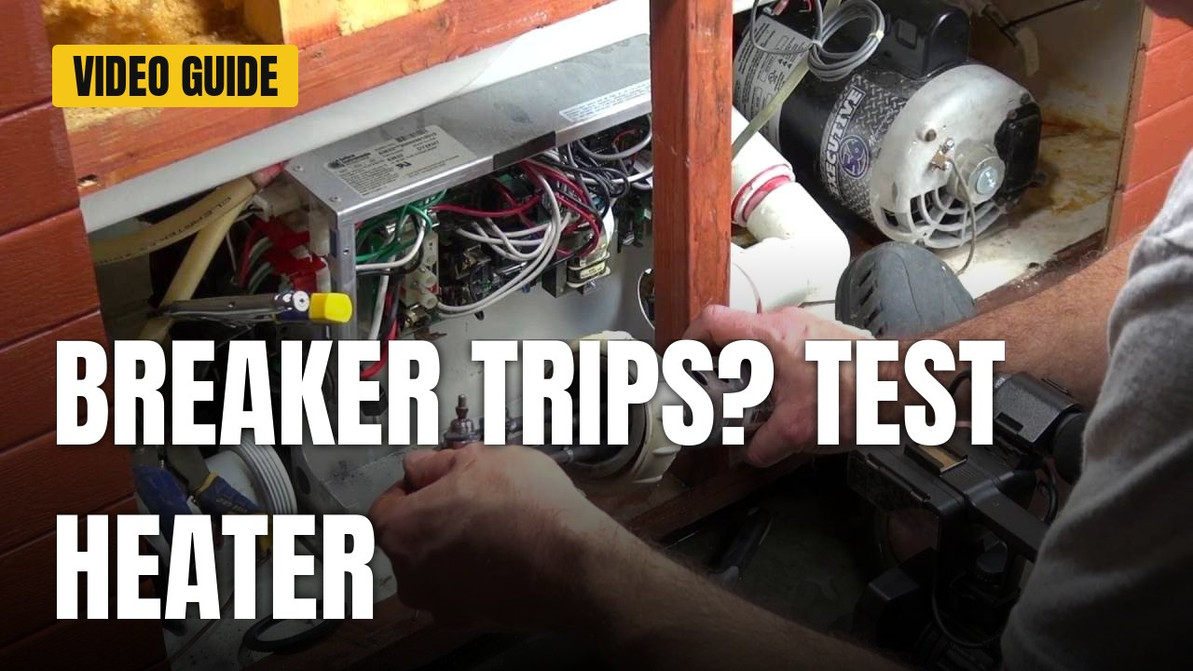
Hot Tub Tripping the GFCI? Symptom Checklist and Heater Fix
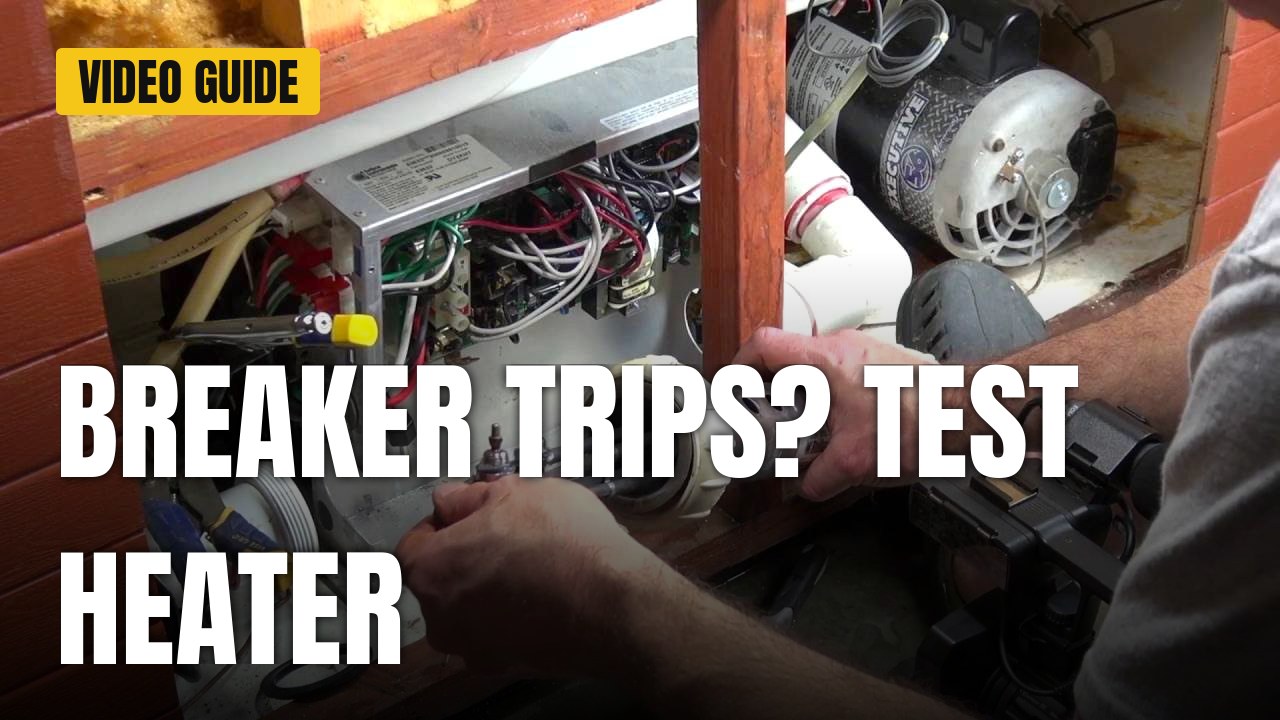
The symptoms: breaker trips as soon as you reset it
You push the breaker all the way off, then all the way back on, and it trips again. Maybe it trips right away, maybe when the pumps start. Either way the tub is dead and you do not know where to look.
The Spa Guy starts with a simple point. In the tub in his video he suspected the heater, but he says he did not know it for a fact. So he works through a set of checks to prove it before anything gets replaced.
The checks, in order, and the fix
Check 1: unplug the blower, if your tub has one, and try the breaker again. Check 2: unplug the ozonator, if you have one. It is a small ozone device that plugs into the side of the pack, and it is usually labeled there. His tub had neither.
Check 3: unplug the circulation pump and each jet pump from the pack, and mark each plug so it goes back where it came from. Reset the breaker. In the video it still tripped, so he plugged everything back in.
Check 4: isolate the heater. With the power off, undo the nuts and pull the wire tabs off the heater. Hold the bottom nut with one wrench (a 1/4 on his tub, some are 3/8) and turn the top nut with a 3/8, so you do not twist the electrode off in case the heater turns out to be good. Then try the breaker. If it holds and the pumps come on, the heater is bad. In the video it held. When he touched a wire back on, it tripped immediately.
Other clues: rust around the edge of an element leg suggests it is leaking. Water gets in from the bottom, comes through the epoxy and causes problems.
If the breaker will not hold even with the heater disconnected, look for something miswired, wires touching, a plug in the wrong place or a pinched wire. Those usually leave a burn mark. A tub that has run fine at your house for a year or years is not likely to have a GFI or wiring problem. A tub you just wired up might. He also says not to blame the transformer. In about 7,000 tubs serviced he has never seen one bad, and he saw one bad on a Sundance once.
To replace the heater: use the slice valves (service valves) to isolate the water. Pull the keeper, push the valve in and twist. They may not hold, especially on an older tub, and on his they did not. Pinch the small bleeder hose with needle-nose vice grips, and pinch it at an angle, which he found stops water better. Pull the M7 sensors out of the heater tube, or on pressure switch tubs such as Gecko style packs, deal with the switch. Loosen the bands and slide the tube out.
Look at the tube label for the wattage. His was 5.5 KW. Take off the two big nuts (3/4 or 19 mm) and the two small ones on top. Tap the element out and slip it out at a slight angle because of the sensor. Clean rust out of the tube with a wire brush. Check the O-rings are in place and put a little silicone around the threads by the O-ring. He does not install them without silicone.
Slide the new element in. It must not touch the inside of the tube, because that makes a hot spot. Hold a finger inside to keep it off the wall while you tighten, then back off a little and center it. Do not tighten anything fully until the bands are on. Hold the bottom nut while tightening the top so the electrode does not twist. If the gasket is old, replace it, because chemicals eat gaskets up.
Who is behind this advice
HTP America Global is owned and run by The Spa Guy team, the same people who make these videos. The advice here comes from the person who did the work on camera. In the video he says he has installed more than 1,000 heaters.
What you get from testing before you buy
- You find out whether the heater is the problem before you buy a part, instead of guessing.
- You can skip the transformer, which he says he has never seen fail in about 7,000 tubs.
- You learn a safer swap method, with the water isolated and the pack powered down.
- You get install tips that protect the new heater: silicone on the O-rings, a centered element and a fresh gasket if the old one is tired.
- You know how to check the repair afterward, with ohm readings, amp draw and a flow code check.
Check the heater, then get the part you need
Before you order, go through the checks in order and make sure the heater is the problem. After the swap, confirm it with a reading across the element. He gets about 10.6 ohms on a 5.5 KW and about 15.5 on a 4 KW, and both are good heaters. Open the slice valves and listen for air, which means a leak. On startup, expect a test fire of about 8 seconds on his M7 system, with a draw of about 20 amps on the 5.5 KW. If you get a flow code, bleed the air out.
The Spa Guy says in the video that if you need heaters, pressure switches or other parts for your hot tub, they probably have it. Shop HTP America Global for the heater element and related parts you need, and watch the video to see each step done.
Watch the full video on YouTube
Recent Posts
-
Watkins Pump Won't Spin or Is Leaking? A Troubleshooting Checklist
Symptoms to look for before you replace a Watkins pump A pump rarely fails without warning. In the …Nov 17th 2026 -
Hot Tub Tripping the GFCI? Symptom Checklist and Heater Fix
The symptoms: breaker trips as soon as you reset it You push the breaker all the way off, then all …Nov 16th 2026 -
Understanding LX Hot Tub Pumps (50Hz vs 60Hz): What International Buyers Must Know
LX spa pumps are some of the most widely used pumps in the hot tub industry. You’ll find them across …Feb 11th 2026